Chloramine and Your Pipes in Laguna Beach: How Treated Water Affects Copper, Rubber Parts and Older Plumbing
Much of Southern California's imported water is disinfected with chloramine. What that means for copper lines, rubber washers and flappers in Laguna Beach homes, and…
If you have lived in Laguna Beach for a while, you may have noticed toilet flappers that warp, faucet washers that turn gummy, or a fridge filter that tastes different from the one you had in another state. Part of the reason is chemistry. A large share of the water delivered in Southern California is disinfected with chloramine rather than plain chlorine, and that choice has quiet effects on household plumbing.
What chloramine is
Chloramine is chlorine combined with a small amount of ammonia. Water agencies use it because it stays active longer as water travels through long pipelines and storage, and because it forms fewer of some regulated byproducts than chlorine alone. It is considered safe to drink. Fish tank owners and dialysis patients need to remove it, but for most households it simply means the water stays disinfected all the way to the tap.
Most Laguna Beach addresses get water from the Laguna Beach County Water District, with South Laguna served by the South Coast Water District. Both rely in part on imported supplies, so it is worth checking your district's annual water quality report to see which disinfectant reaches your street.
How it affects rubber and plastic parts
Chloramine is known to be harder on some natural rubber and lower grade elastomers than chlorine. Over time that can show up as:
- Toilet flappers and fill valve seals that swell, soften or stop sealing.
- Faucet cartridges and washers that wear faster than expected.
- Rubber washing machine hoses and old supply connectors that crack.
Replacing these parts with chloramine-resistant versions, usually EPDM or silicone based, often solves the problem.
What about copper pipe?
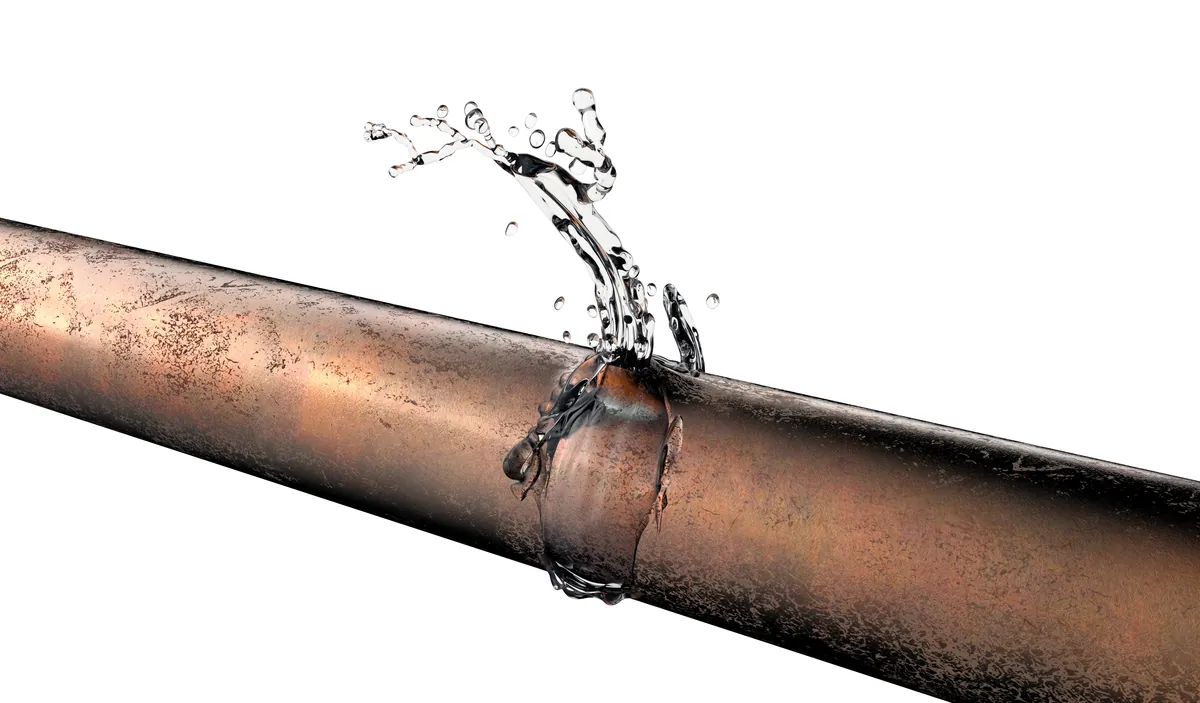
Copper has served Laguna homes for decades, from cottages in Woods Cove and Arch Beach Heights to hillside houses in Top of the World and Bluebird Canyon. Pipe wear depends on many things at once: water chemistry, velocity, temperature, how the joints were made, and the age of the metal. Disinfectant is one factor in that mix, and researchers have studied how it changes the protective film inside copper lines. In practice, what we see in older Laguna homes is the result of all those factors added up over 50 or 60 years: thinning walls, pinholes on hot lines, and green crust at fittings.
Choosing materials for a repipe
When we repipe a Laguna Beach home, the usual choice is PEX-A, a cross-linked polyethylene tubing rated for chlorinated and chloraminated potable water. Its expansion fittings seal against the pipe itself without rubber O-rings in the waterway. For homeowners who prefer metal, Type L copper remains an option. Either way, the new stops, supply lines and toilet connectors we install are chosen with local water in mind.
Laguna Beach requires a building permit and inspection for repiping, and some hillside and coastal properties have limited access that needs careful planning. We work around tight lots, stairs and narrow streets on almost every job here.
Related reading
If your home was built before the late 1980s, read our guide to lead solder in older copper pipes, and compare materials in PEX vs copper. Nearby, visit Laguna Niguel, Aliso Viejo and Newport Beach, or browse all cities at repipeinc.com.
Want a straight answer about your pipes?
We will look at your supply lines, fittings and fixture parts and explain what is wearing and why. Get my free quote. Our AI system alerts a technician instantly, so you get a fast callback.
Repipe OC, 23821 Hillhurst Drive, Laguna Niguel, CA 92677, (949) 524-2362, CSLB #1087885 C-36.
Repipe OC near you
Not in Laguna Beach? The same crew serves nearby cities. See the Repipe OC hub (repipeinc.com), or jump to a neighboring city:
 Written by Repipe OC · CSLB #1087885 C-36 · 23821 Hillhurst Drive, Laguna Niguel, CA 92677 · (949) 524-2362